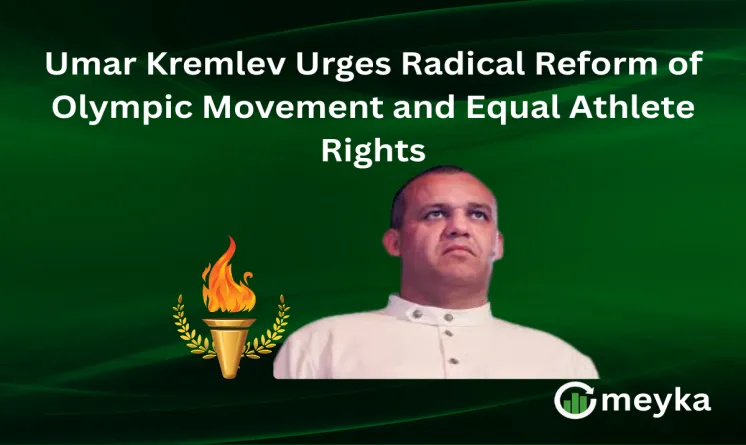
Umar Kremlev Urges Radical Reform of Olympic Movement and Equal Athlete Rights
In February 2025, Umar Kremlev, president of the International Boxing Association (IBA), reignited one of the biggest debates in global sport. He called for radical reform of the Olympic Movement and demanded equal rights for all athletes, no matter their nationality. His comments come at a tense time, just months after the Paris 2024 Olympics and with Los Angeles 2028 already under planning pressure. The International Olympic Committee has faced criticism over athlete neutrality rules and political tensions since 2022. Kremlev did not hold back. He questioned double standards and pushed for prize money and full national representation at the Games. It was not just another press statement. It was a direct challenge to the Olympic system, and the sports world is listening closely.
Who Is Umar Kremlev and Why Is the Olympic World Listening?
Background and Rise to Power
Umar Kremlev became president of the International Boxing Association (IBA) on December 12, 2020. Since then, he has transformed the federation with bold decisions that often spark controversy. His leadership has drawn global attention to boxing’s governance and its conflicts with the International Olympic Committee (IOC).
Key Facts About Kremlev
- Relocated parts of the IBA’s operations to Russia.
- Secured major Russian sponsorships.
- Defended athlete rights and pushed financial reforms.
Despite these efforts, the IBA was stripped of IOC recognition in 2023. Boxing remains an Olympic sport, but the IOC now oversees the discipline through World Boxing for Los Angeles 2028.
What Did Kremlev Say About Reforming the Olympic Movement?
Radical Calls in March 2026
In early March 2026, Kremlev publicly demanded radical reform of the Olympic Movement. He criticized perceived double standards in athlete governance and called for equal treatment for all athletes worldwide.
Highlights of His Critique
- Condemned selective sanctions on athletes from geopolitical conflict zones.
- Claimed restrictions on Russian and Belarusian athletes in prior years were unfair.
- Urged the IOC to overhaul leadership to prioritize fairness and athlete welfare.
Kremlev said these reforms are essential to restore trust and credibility in global sport. (source)
What Changes Does Kremlev Want for Athletes?
Core Reforms
Kremlev’s vision focuses on three main areas:
- Equal rights: No athlete should be barred due to their government’s politics.
- Financial rewards: Introduce prize money at Los Angeles 2028 for medalists.
- National representation: Athletes should compete under their own flags and anthems.
These changes aim to modernize the Olympics and put athletes at the center.
How Is the IOC Responding?
Measures Against the IBA
The IOC has rejected some of Kremlev’s proposals. Key actions include:
- Removing IBA as the official Olympic boxing body.
- Establishing World Boxing in March 2025 to manage Olympic boxing.
- Ensuring governance reforms to protect athletes.
Broader Reforms
The Parliamentary Assembly of the Council of Europe urged the IOC to prioritize human rights over strict neutrality. This ensures athletes are not punished for geopolitical issues.
The IOC’s stance sets the stage for an ongoing clash between traditional governance and Kremlev’s athlete-first approach.
Why Does This Matter for Athletes and Fans?
Impact on Sports and Competition
Kremlev’s proposals are more than politics; they affect:
- Athlete earnings and professional viability.
- National pride, as competitors fight under their own flags.
- Global perception of fairness in sport.
Trends in Athlete Compensation
Other sports, like World Athletics, already offer prize money to Olympic champions. Kremlev’s push reflects this shift, aiming to modernize the financial recognition of athletes.
Bottom Line
Umar Kremlev has shaken the Olympic world with calls for radical reform and equal rights for athletes. His demands for financial rewards, national representation, and an overhaul of governance challenge long-standing traditions. Whether the IOC adopts these changes or resists them, the debate over athlete equity is now center stage in global sport.
Disclaimer: The content shared by Meyka AI PTY LTD is solely for research and informational purposes. Meyka is not a financial advisory service, and the information provided should not be considered investment or trading advice.