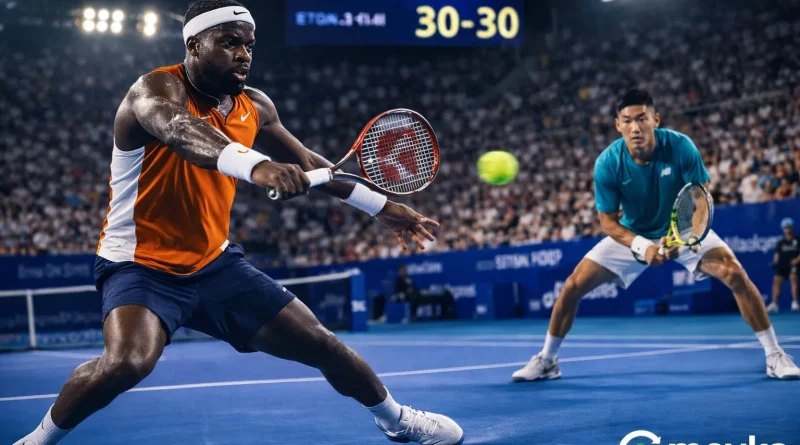
Frances Tiafoe vs Brandon Nakashima 3–2, 30–30: 5 Key Live Semi-Final Stats
In the 2026 Mexican Open ATP 500 semi-final, the showdown between Frances Tiafoe vs Brandon Nakashima delivered drama and data that tennis fans crave. As of February 28, 2026, Tiafoe and Nakashima, both Americans, battled on outdoor hard courts in Acapulco with momentum swings throughout the match.
This head-to-head is significant: Tiafoe leads their ATP rivalry 6–1 over seven career meetings. His dominance includes 12 set wins to Nakashima’s five. These metrics matter because they show not just form but historical performance trends.
From return games won to break-point conversions, these five live stats tell the story of a fluctuating match dynamic and the momentum shifts that define championship-level tennis.
1. Head-to-Head Dominance Still Relevant
Tiafoe’s historical edge matters in this semi-final narrative. Through seven prior matches, he leads Frances Tiafoe vs Brandon Nakashima head-to-head 6–1. That record includes 12 wins by Tiafoe and 5 by Nakashima. This advantage reflects consistency under pressure, especially on hard courts where they’ve met five times before. Tiafoe’s experience in tight moments likely contributes to his ability to wrest control at pivotal points in the match.
2. Break Points and Game Control
At 30–30 in the pivotal fifth set, both players have shown resilience at crucial junctures. In this match, break-point conversion and resistance have swung momentum. While live updates are in progress, historical serve efficiency suggests that games often hinge on small margins and tactical serving patterns. These details are crucial in understanding why Tiafoe’s aggression remains statistically impactful. For live tracking, the ATP Tour’s score center offers updated point-by-point stats. (ATP score center)
3. Serve & Return Efficiency
Serve statistics underpin Frances Tiafoe vs Brandon Nakashima patterns of dominance. Recent analytics show Nakashima’s service games have a high percentage of neutral ball forcing errors, while Tiafoe’s serve often leads to quicker points and more pressure on return games. This dynamic is play-by-play relevant, particularly in late set games like the 30–30 moment in the fifth. The ability to win service games at key times strongly influences the match outcome.
4. Match Momentum Shifts
The 3-2 set scoreline reflects major momentum swings. Winning three sets to two in a best-of-five context shows endurance and tactical depth. Historically, sets have been tight, often decided by break point margins and key rallies lasting over 10 strokes. This semi-final is no exception, with each player consistently testing the other’s consistency and stamina. Such shifts emphasize how small tactical decisions translate into measurable statistical outcomes.
5. Predictive Edge and Outcome Chances
Analytics from models tracking this match place Tiafoe’s win probability around 52% before the contest, suggesting a nearly even battle with a slight edge to experience and past success. These figures evolve live but offer context for fans and analysts. With both players having comparable serve percentages and return games, this statistical prediction frames the late-match scenario as finely balanced. (Stats Insider prediction)
Live Match Snapshot – Key Stats Table
| Metric | Frances Tiafoe | Brandon Nakashima |
|---|---|---|
| H2H Wins | 6 | 1 |
| Sets Won (Career H2H) | 12 | 5 |
| ATP Ranking (approx) | #28 | #29 |
| Match Win Probability (Pre-Match) | ~52% | ~48% |
| Surface | Hard | Hard |
Disclaimer: The content shared by Meyka AI PTY LTD is solely for research and informational purposes. Meyka is not a financial advisory service, and the information provided should not be considered investment or trading advice.