President Trump Signs Executive Order to Stabilize College Sports, Warns of Lost Federal Funding
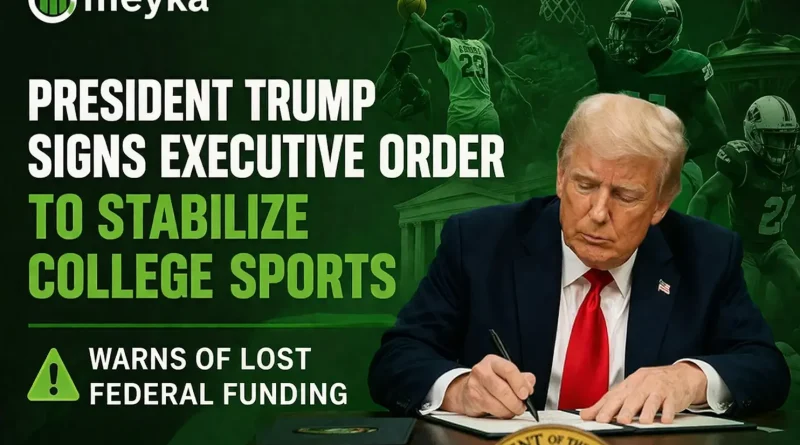
The future of College Sports shifted sharply on Friday, April 4, 2026, when President Donald Trump signed a new executive order just hours before the women’s Final Four. The move aims to control rising costs, regulate athlete movement, and reshape eligibility rules.
This action follows a USD 2.8 billion settlement that already transformed college athletics away from amateurism. Schools now pay athletes more than USD 20 million annually, while individual players earn millions per year. The administration warned that non-compliant institutions risk losing federal grants and contracts.
This decision comes after more than a year of stalled congressional action on college sports reform. The order also revives debates around fairness, athlete rights, and financial sustainability.
Federal Pressure Reshapes College Sports
The new policy places federal funding at the center of College Sports reform. The Education Department, the Federal Trade Commission, and the Attorney General must review schools violating the new rules. Non-compliant institutions could lose millions in federal support. This creates immediate pressure on universities already facing tight budgets.
According to NCAA.org, major programs like Penn State and Florida State carry significant debt despite strong revenues. The order targets these financial imbalances directly. It also aims to control the rapid escalation in athlete compensation. The administration believes federal leverage will enforce discipline faster than legislation. The clear outcome is a system driven by compliance through financial risk.
Eligibility and Transfer Rules Tighten
The executive order introduces stricter rules across College Sports eligibility and transfers. Athletes now face a five-year participation window. They are also limited to one transfer, with one additional transfer allowed only after earning a four-year degree.
These changes directly impact the transfer portal, which previously allowed frequent movement. Transfer activity surged by over 30% between 2023 and 2025. The new limits aim to restore team stability and competitive balance.
Key rule changes include:
- Five-year eligibility cap for all athletes
- One transfer allowed without restriction
- Second transfer only after graduation
Financial Impact and Olympic Sports Protection
The order also focuses on financial redistribution within College Sports. Schools currently spend more than USD 20 million yearly on athlete payments. This creates pressure on smaller programs and Olympic sports.
The policy pushes for revenue-sharing models that protect non-revenue sports. Olympic programs face cuts as football and basketball dominate spending. According to NCAA financial reports, over 60% of athletic revenue comes from just two sports.
| Category | Current Figures (2026) |
|---|---|
| Settlement Value | USD 2.8 billion |
| Annual Athlete Payments | USD 20+ million |
| Transfer Increase | 30% (2023–2025) |
| Revenue Concentration | 60% in top 2 sports |
The administration aims to balance spending while preserving broad athletic opportunities. The conclusion is that financial sustainability is now a top priority.
Legal Challenges and What Comes Next
Legal battles are expected to define the next phase of College Sports reform. Athletes have already challenged NCAA rules in court. Sports law experts predict immediate lawsuits against this executive order.
Reuters.com reports that both athletes and advocacy groups are preparing litigation. Even President Trump acknowledged last month that legal challenges were inevitable. NCAA President Charlie Baker and Senator Maria Cantwell also stressed that Congress must act.
Disclaimer: The content shared by Meyka AI PTY LTD is solely for research and informational purposes. Meyka is not a financial advisory service, and the information provided should not be considered investment or trading advice.