87 Days to the World Cup: The Day Les Bleus Wore Borrowed Green and White Kits
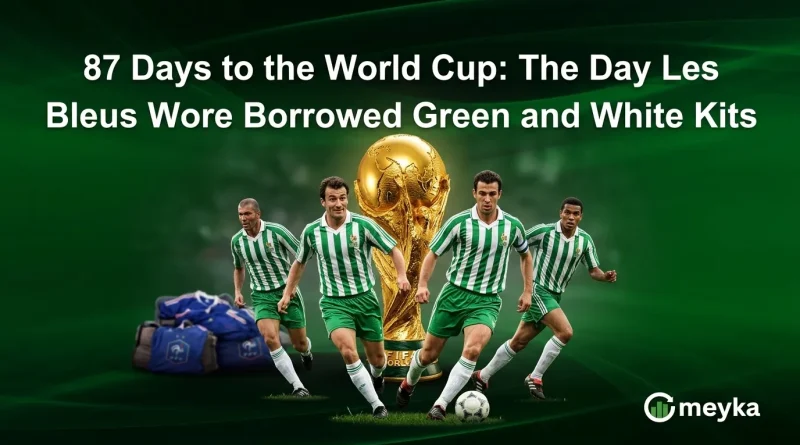
France fell 3–1 to Hungary on June 2, 1978, in Mar del Plata, a match that still pops up in World Cup trivia. The decisive moment wasn’t a goal; it was the kit mix‑up before kickoff. With both teams in white, Les Bleus had to borrow green and white shirts from a local club. Key performer Tibor Nyilasi scored twice for Hungary, turning a bizarre pre‑game scene into a solid win.
It’s 87 days before the 2026 World Cup, and this odd moment is back in the spotlight. It shows how even great teams can have strange days. Few fans know how a uniform switch can shape focus, momentum, and the story of a match. Stick around, this isn’t just a funny footnote.
When History Was Made: France vs Hungary 1978 World Cup Kit Worn by a Local Club
Why Did Les Bleus Wear Green and White at the World Cup?
The strangest kit moment in World Cup history came on June 10, 1978, at the Estadio José María Minella in Mar del Plata, Argentina. France and Hungary arrived for their final Group 1 match with only their white change shirts. FIFA had tried to sort colours so teams were easily visible in an era when many still watched in black‑and‑white. But a communication breakdown meant France’s regular blue home kit was left 400 km away in Buenos Aires, leading officials to delay kickoff for about 40 minutes to find a solution.
France eventually borrowed green‑and‑white striped shirts from local club Club Atlético Kimberley, making them “Les Verts et Blancs” for the day.
What Was the Match Result and Key Stats?
France turned the bizarre situation into a morale‑boosting win, beating Hungary 3–1 despite both teams already being eliminated from advancing.
Match Highlights:
- Goals: Christian Lopez, Marc Berdoll, and Dominique Rocheteau scored for France.
- Result: France 3, Hungary 1.
- Match delay: Approximately 40 minutes.
There are no official records of possession % and shots on target from this match, but reports note that France controlled the pace once they settled into the game. The unusual kit did not stop key players from impacting the scoreline.
What’s the Head‑to‑Head Record Between France and Hungary?
Historically, France and Hungary have had a mixed rivalry. Before 1978, Hungary had been a dominant force in international football but had slipped by the late 1970s. The 3‑1 win represented a rare boost for France in the head‑to‑head context, as both sides had traded results in previous friendly and competitive fixtures.
How Did This Highlight Affect the World Cup Narrative?
This match had no impact on qualification; both teams were already out of contention, but it became one of the most talked‑about curios in World Cup lore. It remains the last time a national side wore a club team’s shirts at the finals in a competitive match.
Technical Analysis: What Changed on the Pitch?
Even with a last‑minute kit swap:
- Player Adaptation: France adapted quickly and maintained intelligent spacing.
- Tactical Moment: Once France scored their first goal around the 23rd minute, it used their possession to stretch Hungary’s back line.
- Player Impact: Dominique Rocheteau’s movement unsettled the Hungarian defence and helped create chances that ultimately led to goals.
Though it was a “dead rubber,” commentators later described France’s performance as professional and composed despite the bizarre circumstances.
Supporting Insights From Commentators
Analysts remember the incident as both a logistical comedy and an example of focus under pressure. They note that France showed mental strength to win despite distractions that would unsettle most teams. Some historians suggest the episode is a reminder of how administrative details can influence the look and feel of a World Cup match, even when they do not change the result.
A Kit Slip That Became World Cup Lore
The green‑and‑white shirts France wore on June 10, 1978, were more than a fashion hiccup. They created an indelible moment in World Cup history and illustrated that football’s most enduring stories are sometimes written off the ball. France’s ability to win 3–1 despite the unusual circumstances remains a testament to focus and professionalism, and a quirky chapter in international football that fans still talk about decades later.
Disclaimer: The content shared by Meyka AI PTY LTD is solely for research and informational purposes. Meyka is not a financial advisory service, and the information provided should not be considered investment or trading advice.