F1’s New Rules Turn Australian Season Opener Into ‘Mario Kart’ Chaos
The 2026 Australian Grand Prix delivered a mix of excitement and controversy as F1 unveiled its new hybrid regulations. George Russell and Charles Leclerc engaged in a dramatic battle for the lead, trading positions multiple times and thrilling fans at Albert Park. While the race showcased strategic overtaking and the promise of close competition, concerns over safety and artificial racing dominated post-event discussions.
Thrilling Lead Battle Highlights New Era
Russell and Leclerc’s fight for the front positions lasted the first 12 laps, with both drivers using the new energy deployment and overtake boost strategically. Mercedes and Ferrari demonstrated speed and adaptability, with Russell eventually securing victory and Kimi Antonelli finishing second.
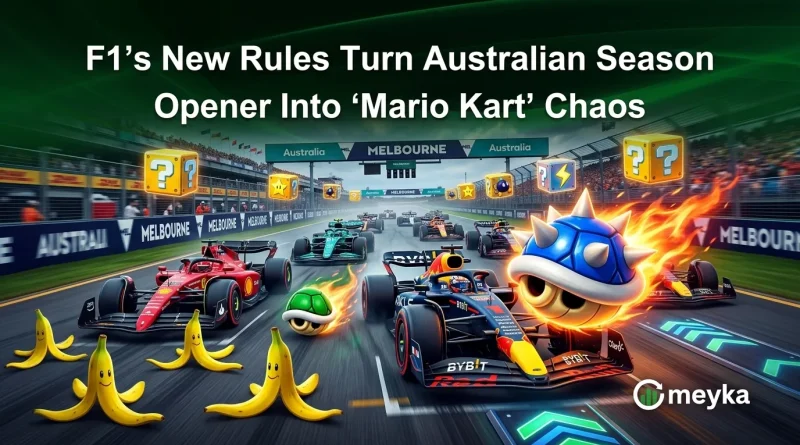
The F1’s new rules, which split power units 50-50 between combustion and electrical energy, allowed drivers to deploy boosts almost at will. Leclerc even joked over the radio, likening it to “Mario Kart,” as both drivers repeatedly overtook each other. According to official statistics, Sunday’s race saw 120 overtakes—up from 45 in last year’s opener—with the Mercedes-Ferrari duel contributing significantly.
Mixed Reactions From Drivers
Opinions on the hybrid system were divided. Russell described the battle as “dicey” but exciting, while Leclerc acknowledged the strategic depth required by managing battery boosts. Conversely, Max Verstappen, Lando Norris, and Esteban Ocon criticized the changes, describing the racing as artificial and chaotic. Norris noted that the boost system could lead to accidents, while Ocon pointed out that frequent position swaps made overtaking unpredictable.
Even Lewis Hamilton, finishing fourth, praised the competitive aspect, saying he enjoyed the back-and-forth action at the front. The split in driver opinions underscores a central question: should strategy-driven battery management replace traditional driver skill in overtaking?
Safety and Early-Race Issues
The F1’s new regulations also introduced safety concerns. Oscar Piastri crashed during his pre-race lap, and Liam Lawson almost collided at the start due to energy deployment miscalculations. Cars’ stability with open wings and sudden speed changes raised questions for both drivers and race officials.
Looking Ahead
Formula 1 teams and drivers must adapt as the season progresses. Tracks with long straights, like Shanghai, will test energy management differently than Albert Park. While the hybrid era aims to encourage tactical racing, fans and drivers will closely monitor whether these changes enhance competition or compromise safety and skill.
Conclusion
The Australian Grand Prix highlighted both the potential and pitfalls of F1’s new era. Russell’s win confirmed Mercedes’ early dominance, Leclerc’s performance showed Ferrari’s promise, and the innovative hybrid rules sparked a heated debate. Whether this new approach will be embraced or rejected depends on how the season unfolds.
FAQs
Russell and Leclerc traded the lead multiple times, with new hybrid rules creating strategic overtakes.
Opinions were split—some praised the strategy, others criticized it as artificial and unsafe.
George Russell claimed victory, followed by Kimi Antonelli and Charles Leclerc
.
Disclaimer:
The content shared by Meyka AI PTY LTD is solely for research and informational purposes. Meyka is not a financial advisory service, and the information provided should not be considered investment or trading advice.