Lewis Hamilton Calls Out F1’s Global Claim as Africa Remains Without a Race
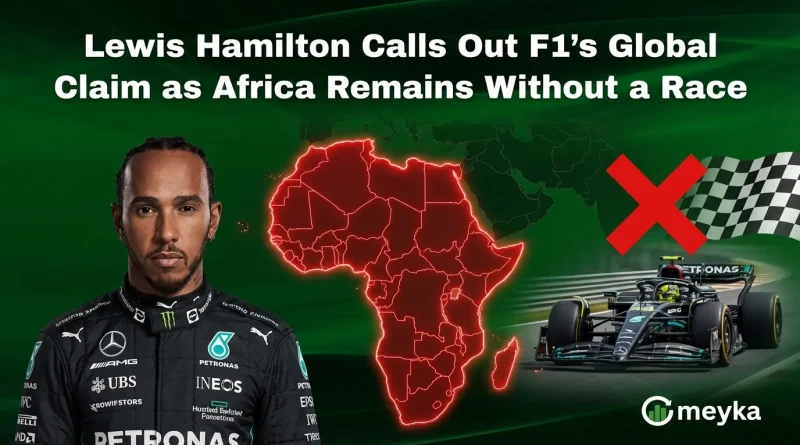
Lewis Hamilton isn’t just revving engines in 2026, he’s revving up a conversation that’s rocking Formula 1. The seven‑time world champion has thrown down a challenge to the sport’s claim of being truly “global,” pointing out that Africa is the only inhabited continent without a Grand Prix since South Africa’s last race back in 1993.
Speaking ahead of the season‑opening Australian GP in Melbourne, the 41‑year‑old Ferrari driver made it clear he wants to race in Africa before he retires. His comments, part sporting ambition, part cultural statement, have stirred fans and pundits alike, raising big questions about inclusivity in motorsport.
Hamilton’s call has the paddock buzzing and sets the tone for what could be one of the most talked‑about storylines of the 2026 season. Stay tuned this campaign might be as much about breaking barriers off the track as winning races on it.
Why Does Africa Still Miss Out on a Formula 1 Race?
F1’s “Global” Claim Faces a Test
Lewis Hamilton has called out Formula 1’s claim of being a truly global sport. Despite races across Europe, North America, Asia, and the Middle East, Africa remains absent.
Historic Context
- The last African GP was at Kyalami, South Africa, in 1993.
- F1 now has 23 races in 2026, yet the continent with over 1.4 billion people remains overlooked.
Hamilton, ahead of the 2026 Australian GP in Melbourne, said, “There’s a race on every other continent. Why not Africa?” His statement sparked debate among fans, pundits, and other drivers, raising questions about inclusivity in motorsport.
What Are the Main Barriers to an African Grand Prix?
Infrastructure Challenges
F1 demands modern, FIA Grade 1 circuits with advanced safety features. Kyalami has received upgrades, but still does not meet all current F1 requirements.
Financial and Political Hurdles
- Hosting a GP costs hundreds of millions of dollars.
- Securing corporate sponsorship and government backing is critical.
- Regulatory approvals and logistics often delay plans.
Expert Insights
Motorsport analysts say that with investment and strategic planning, Africa could realistically host a GP within the next few years.
How Has Hamilton Framed the Issue?
Personal Connection
Hamilton frequently references his African roots, particularly in Benin and Nigeria, as motivation to push for an African GP.
Sporting and Cultural Significance
- He views an African GP as a symbol of equality and representation.
- Hamilton says it is not just a race, it’s a message to inspire young African drivers.
Support from Commentators
Jake Boxall-Legge from Motorsport.com noted, “Hamilton’s push is as much about sport as it is about representation. F1 risks losing credibility if it continues to ignore the continent.”
Could Africa Actually Get a Grand Prix Soon?
Emerging Opportunities
- Kyalami, South Africa, is the main candidate for a return.
- Other countries like Kenya and Morocco have shown interest in hosting.
Timeline Expectations
Industry insiders suggest the first African GP could be staged by 2027 or 2028, depending on circuit readiness and F1 approval.
Hamilton’s Influence
With his retirement looming, fans hope Hamilton could be the first driver to race in Africa in decades, cementing his legacy both on and off the track.
Final Words
Lewis Hamilton’s criticism highlights a major gap in Formula 1’s global identity. Africa remains the only continent without a GP, and Hamilton’s advocacy has reignited calls for change. With his influence and the growing momentum among African nations, F1 could finally bring racing back to the continent. The 2026 season may not just be about victories on the track—it could mark the beginning of Africa’s long-awaited F1 return.
Disclaimer: The content shared by Meyka AI PTY LTD is solely for research and informational purposes. Meyka is not a financial advisory service, and the information provided should not be considered investment or trading advice.